Blog
Blog
Four Core Steps to Designing Battery Storage Grid Services Strategies
Four Core Steps to Designing Battery Storage Grid Services Strategies

Chris Sefel, Senior Business Development Manager
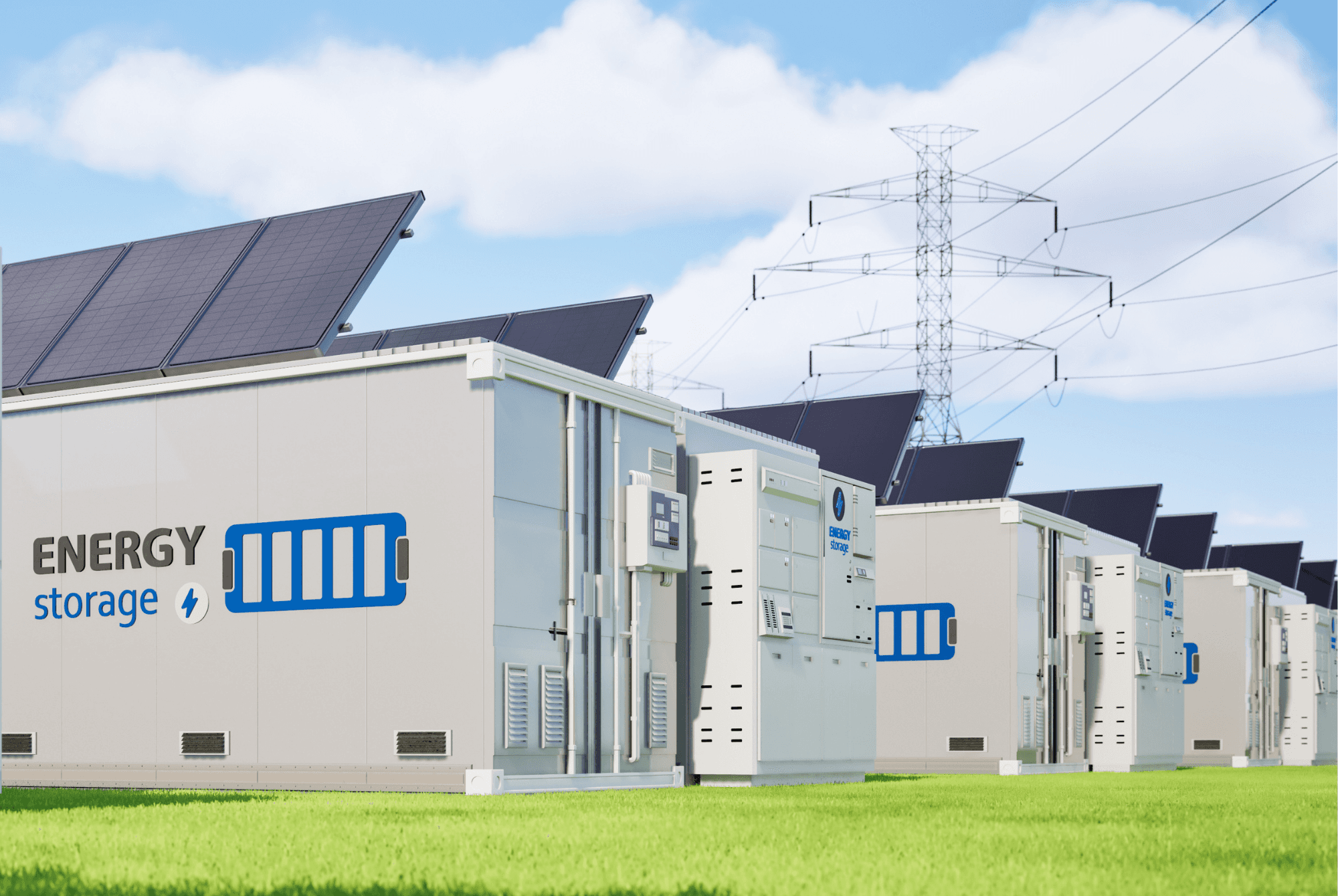
Virtual power plants (VPPs) have moved from a “nice-to-have” to a serious line item in the storage value stack. As grids strain under rising demand, batteries are increasingly being asked to do more than sit behind the meter.
For battery solution providers, success hinges on understanding how grid services fit alongside onsite priorities, customer expectations, market rules, and operational realities.
Here’s a look behind the scenes at how Leap approaches building a grid services participation strategy with our storage partners.
Step 1. Understand the battery’s primary job.
Every battery has a primary reason for being installed. Typically, it’s one (or more) of three core functions:
Backup power
On-bill savings
Revenue generating activities like demand response
Grid services program selection starts with understanding onsite priorities and how they fit into the provider’s business model. Some Leap partners aim to use grid services to grow their hardware sales, leveraging grid revenue as a margin enhancer that makes the battery more valuable. Other partners view grid services as a central component of their offering.
That distinction drives very different strategies. If grid services are additive, Leap recommends programs and strategies that complement existing onsite optimization. If grid services are central, we may design the system’s participation strategy to maximize grid value first, then determine how other use cases fit around it.
A residential battery primarily used for self-consumption, for example, is likely not a good fit for California’s Resource Adequacy (RA) program. For NEM 3 systems, the value of reducing energy imports and minimizing solar exports often outweighs RA revenue, making participation counterproductive.
Ranking onsite priorities isn’t always straightforward, particularly for commercial and industrial sites that often balance multiple functions and multiple decision-makers. That added complexity makes alignment essential, and misalignment expensive.
Step 2. Evaluate program fit - practically, not theoretically
To determine best-fit grid services programs for a partner’s storage asset, we start with a few foundational questions:
Is the battery co-located with solar?
Can the system export to the grid?
Who owns the customer contract, and does it allow grid services?
Are there conflicting programs tied to other asset types?
How frequently does the partner/customer want their battery dispatched?
From there, we can assess which program structures match the needs of the project/portfolio. Key factors include:
Program time periods: Are events seasonal or year-round?
Baselines: Is a baseline used to assess performance? If so, how is it calculated?
Exports: Are energy exports allowed and compensated?
Dispatch frequency: How often are events called?
Stackability: Which programs can stack together to maximize total value?
For batteries, attractive programs typically compensate for energy exports, use a fixed or no baseline methodology, stack with other value streams, and offer options for participation throughout the year.
Ease of market deployment is another important part of the equation: the timeline to interconnect may matter more than headline incentive value. For example, Massachusetts may offer lucrative C&I programs, but multi-year interconnection timelines can delay projects and stall growth. In contrast, California may deliver faster deployment, even if per-project grid services revenue is lower.

Step 3. Don’t forget about data
Even when strategy and program fit align, participation depends on data readiness. Most grid services programs fall into one of two categories:
Meter-level data programs
These require customer permission to access utility meter data. Enrollment depends on customer authorization and accurate site-level information.
Device-level data programs
These rely on telemetry from the battery itself or its control system. In many cases, the developer or customer already has the necessary data, but programs may require more detailed or frequent reporting.
Understanding which type of program you’re targeting helps streamline enrollment and avoid unnecessary friction.
Step 4. Plan for program evolution
Energy market rules are slowly catching up to what storage can actually do. Grid services programs originally designed for large load curtailment are being refined to better account for the speed and precision batteries can provide.
At the same time, policy shifts — such as NEM 3 in California — have changed the economics of residential storage and reshaped how providers think about revenue stacking. We’re seeing residential battery partners increasingly prioritizing grid services revenue as rate structure changes make on-bill savings less lucrative.
Some extremely popular new programs - like DSGS in California - are being reassessed in the face of broader budgeting questions, creating uncertainty for their long-term funding. This reflects the fluidity of the current moment more than the ultimate future viability of grid services programs (the fastest, cheapest path to new capacity). Partners should be prepared to be flexible as the program ecosystem goes through growth cycles.
Step Zero: Select the right VPP platform partner
The right grid services strategy for batteries is ultimately a series of interconnected design decisions. Providers who sustain successful offerings treat participation as part of their broader system architecture and core business strategy, not an afterthought.
At Leap, our role is to make that design process simpler. We work with each of our storage partners to build the optimal grid program value stack for their business and customer needs, mapping out a participation strategy that strengthens their core offering.
By automating key operations and providing turnkey market access through our API-powered platform, we allow our partners to focus on deployment, customer relationships, and scaling their portfolios with confidence.
Virtual power plants (VPPs) have moved from a “nice-to-have” to a serious line item in the storage value stack. As grids strain under rising demand, batteries are increasingly being asked to do more than sit behind the meter.
For battery solution providers, success hinges on understanding how grid services fit alongside onsite priorities, customer expectations, market rules, and operational realities.
Here’s a look behind the scenes at how Leap approaches building a grid services participation strategy with our storage partners.
Step 1. Understand the battery’s primary job.
Every battery has a primary reason for being installed. Typically, it’s one (or more) of three core functions:
Backup power
On-bill savings
Revenue generating activities like demand response
Grid services program selection starts with understanding onsite priorities and how they fit into the provider’s business model. Some Leap partners aim to use grid services to grow their hardware sales, leveraging grid revenue as a margin enhancer that makes the battery more valuable. Other partners view grid services as a central component of their offering.
That distinction drives very different strategies. If grid services are additive, Leap recommends programs and strategies that complement existing onsite optimization. If grid services are central, we may design the system’s participation strategy to maximize grid value first, then determine how other use cases fit around it.
A residential battery primarily used for self-consumption, for example, is likely not a good fit for California’s Resource Adequacy (RA) program. For NEM 3 systems, the value of reducing energy imports and minimizing solar exports often outweighs RA revenue, making participation counterproductive.
Ranking onsite priorities isn’t always straightforward, particularly for commercial and industrial sites that often balance multiple functions and multiple decision-makers. That added complexity makes alignment essential, and misalignment expensive.
Step 2. Evaluate program fit - practically, not theoretically
To determine best-fit grid services programs for a partner’s storage asset, we start with a few foundational questions:
Is the battery co-located with solar?
Can the system export to the grid?
Who owns the customer contract, and does it allow grid services?
Are there conflicting programs tied to other asset types?
How frequently does the partner/customer want their battery dispatched?
From there, we can assess which program structures match the needs of the project/portfolio. Key factors include:
Program time periods: Are events seasonal or year-round?
Baselines: Is a baseline used to assess performance? If so, how is it calculated?
Exports: Are energy exports allowed and compensated?
Dispatch frequency: How often are events called?
Stackability: Which programs can stack together to maximize total value?
For batteries, attractive programs typically compensate for energy exports, use a fixed or no baseline methodology, stack with other value streams, and offer options for participation throughout the year.
Ease of market deployment is another important part of the equation: the timeline to interconnect may matter more than headline incentive value. For example, Massachusetts may offer lucrative C&I programs, but multi-year interconnection timelines can delay projects and stall growth. In contrast, California may deliver faster deployment, even if per-project grid services revenue is lower.
Step 3. Don’t forget about data
Even when strategy and program fit align, participation depends on data readiness. Most grid services programs fall into one of two categories:
Meter-level data programs
These require customer permission to access utility meter data. Enrollment depends on customer authorization and accurate site-level information.
Device-level data programs
These rely on telemetry from the battery itself or its control system. In many cases, the developer or customer already has the necessary data, but programs may require more detailed or frequent reporting.
Understanding which type of program you’re targeting helps streamline enrollment and avoid unnecessary friction.
Step 4. Plan for program evolution
Energy market rules are slowly catching up to what storage can actually do. Grid services programs originally designed for large load curtailment are being refined to better account for the speed and precision batteries can provide.
At the same time, policy shifts — such as NEM 3 in California — have changed the economics of residential storage and reshaped how providers think about revenue stacking. We’re seeing residential battery partners increasingly prioritizing grid services revenue as rate structure changes make on-bill savings less lucrative.
Some extremely popular new programs - like DSGS in California - are being reassessed in the face of broader budgeting questions, creating uncertainty for their long-term funding. This reflects the fluidity of the current moment more than the ultimate future viability of grid services programs (the fastest, cheapest path to new capacity). Partners should be prepared to be flexible as the program ecosystem goes through growth cycles.
Step Zero: Select the right VPP platform partner
The right grid services strategy for batteries is ultimately a series of interconnected design decisions. Providers who sustain successful offerings treat participation as part of their broader system architecture and core business strategy, not an afterthought.
At Leap, our role is to make that design process simpler. We work with each of our storage partners to build the optimal grid program value stack for their business and customer needs, mapping out a participation strategy that strengthens their core offering.
By automating key operations and providing turnkey market access through our API-powered platform, we allow our partners to focus on deployment, customer relationships, and scaling their portfolios with confidence.

